The Maggots on Your Ceiling: Indian Meal Moths
Found worms on your kitchen ceiling? It's Indian Meal Moths. Learn how they got in your pantry and the 'Tupperware Rule' to stop them.
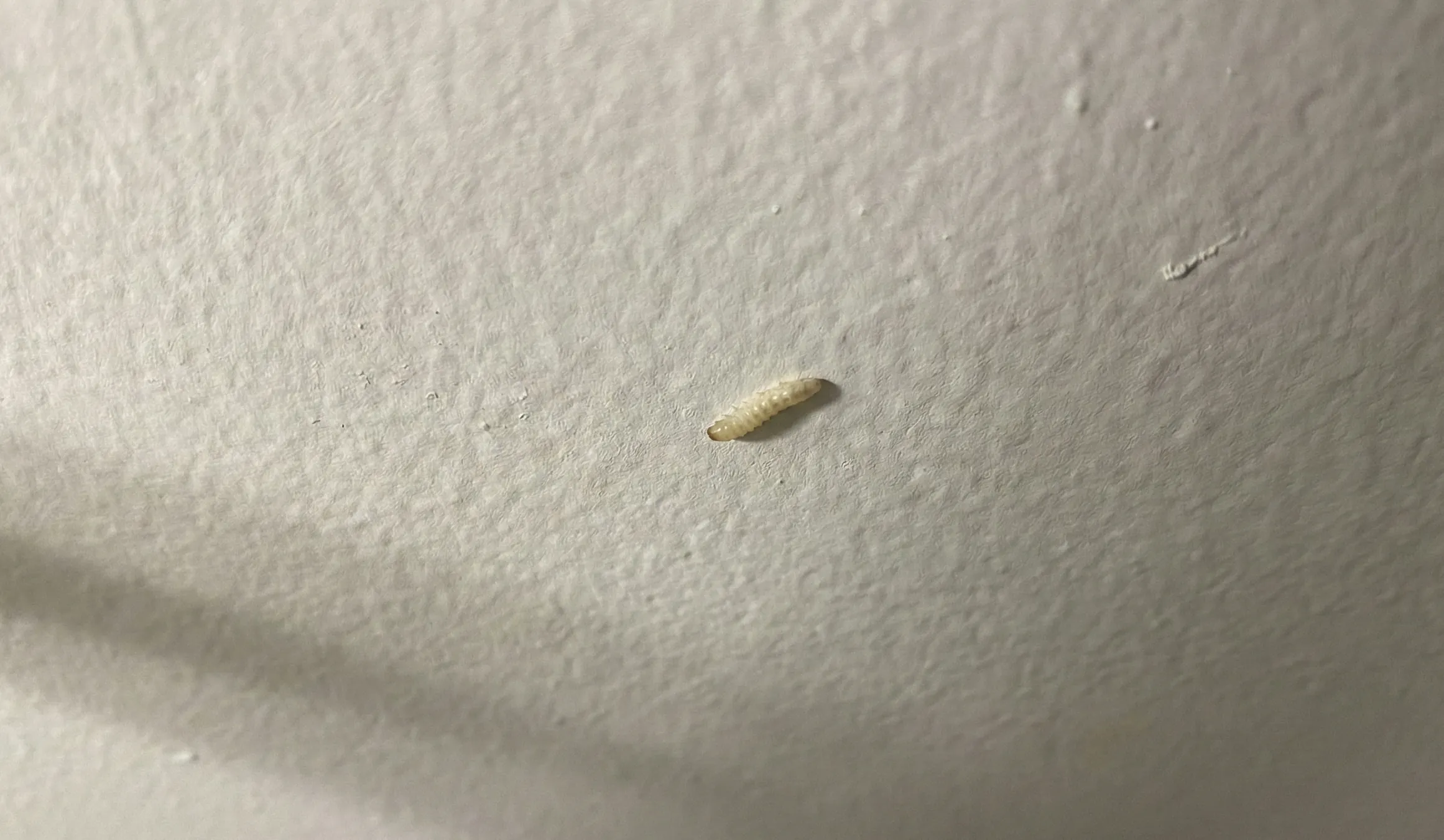
Finding a small white worm crawling across a kitchen ceiling is a specific and alarming sign. It almost always points to an infestation of Indian Meal Moths (Plodia interpunctella).
While seeing a moth fly out of a cupboard is annoying, seeing larvae (the worms) on the ceiling indicates the infestation has completed a full cycle.
How They Enter the Home
Unlike house flies or ants, these pests rarely fly in through open windows. They are typically brought inside via grocery packaging. The most common carriers are birdseed, dry pet food, bulk rice, or flour.
The eggs are microscopic and can survive in the folds of packaging or inside sealed boxes. Once in a pantry, the larvae hatch and can chew through thin plastic and cardboard to spread to other dry goods.
The Ceiling Phenomenon
The reason larvae appear on the ceiling—often far from the food source—is biological. When the larva is fully grown and ready to pupate (turn into a moth), it has an instinct to move upward to find a crack or crevice for its cocoon. In a kitchen, they climb the walls until they hit the ceiling, then wander looking for a corner.
Breaking the Cycle
Spraying pesticides in a pantry is generally unsafe and ineffective against the eggs. The only reliable removal method is mechanical:
- Inspect and Discard: Check all grain-based products. Look for "webbing" inside the bags—clumps of grain stuck together by silk. Anything suspicious should be discarded immediately outside the home.
- Hard Containers: To prevent re-infestation, transfer all remaining dry goods (cereal, pasta, flour, pet food) into hard plastic or glass containers with rubber seals. Screw-top lids are best; snap-tops sometimes leave gaps large enough for tiny larvae.
- Pheromone Traps: Sticky traps designed for "Pantry Moths" attract the male moths effectively. This helps reduce the population and serves as a good monitoring tool to see if the infestation is clearing up.