The Zombie Fly of Winter: Cluster Flies
Finding big, lazy flies on your windows in January? They aren't trash flies. They are Cluster Flies hibernating in your walls. Don't squash them!
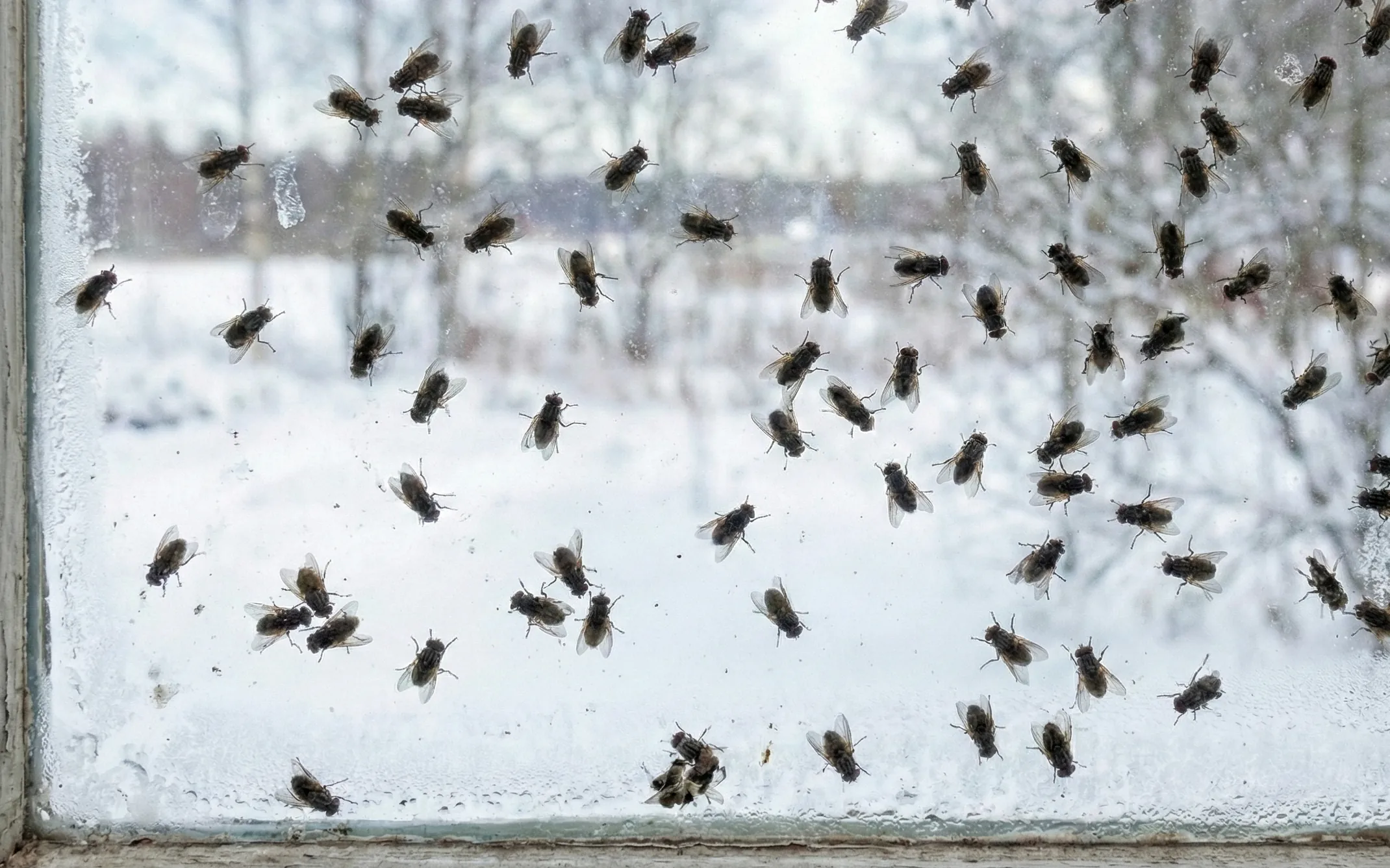
Finding large, slow-moving flies in a house during the dead of winter is a confusing phenomenon. Unlike house flies or bottle flies, which are associated with trash and warm weather, these are likely Cluster Flies.
They appear sluggish, often spinning on windowsills or bumping clumsily into glass on sunny winter days. They are not breeding in the home's trash, nor is there likely a dead animal in the walls.
Life Cycle and Entry
Cluster Flies are earthworm parasites. They spend their summer stages outside in the soil. As temperatures drop in autumn, adults seek sheltered crevices to hibernate—often choosing the siding or attics of homes. They enter in large groups, hence the name "cluster."
The "False Spring" Effect
The sudden appearance of these flies in living spaces (like a living room or bedroom) usually happens on bright, sunny winter days. The sun warms the roof and attic, tricking the dormant flies into thinking spring has arrived.
Attempting to leave their hibernation spots to return outdoors, they often follow light and warmth down through recessed lighting, vents, or window frames, ending up inside the house instead of outside.
Removal Advice
Squashing Cluster Flies is not recommended. They are sometimes called "buckwheat flies" because they release a greasy, sweet-smelling fluid when crushed, which can stain curtains, paint, and upholstery.
The most effective removal method is using a handheld vacuum cleaner to suck them up from the window. Prevention must be done in late summer by sealing exterior cracks around the roofline with silicone caulk; once winter arrives, the flies are already inside the walls.